


In today's fast-paced work environment, maintaining good posture and minimising back pain are essential for overall health and productivity.
Many people find that sitting on a traditional office chair for a long time can cause discomfort and back pain.
One alternative would be kneeling chairs, as they are designed to encourage a more natural posture and alleviate back pain.
In this article, we will explore the benefits of kneeling chairs and how long you should sit in them.
1. Promotes better posture
One of the primary benefits of kneeling chairs is their ability to promote better posture. Traditional office chairs often cause users to slouch, leading to poor spinal alignment and discomfort.
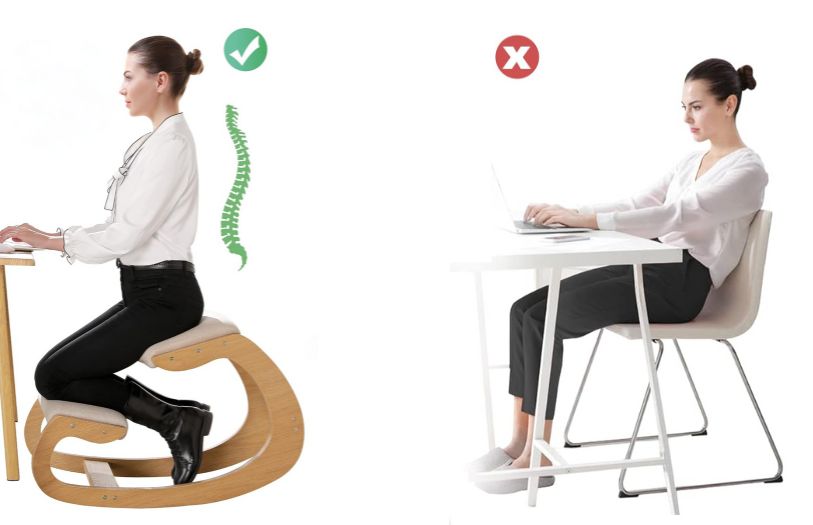
Kneeling chairs, on the other hand, tilt the pelvis forward, aligning the spine and reducing pressure on the lower back. This position encourages users to sit upright, which can lead to improved posture over time.
Below you can see the Predawn Ergonomic Kneeling Chair, which promotes straight posture.
2. Reduces lower back pain
Lower back pain is a common complaint among office workers who spend long hours sitting.
Kneeling chairs can help alleviate this discomfort by distributing the body’s weight more evenly between the spine and the shins.
This reduces the strain on the lower back muscles and the lumbar spine, potentially providing relief from chronic back pain.
3. Engages core muscles
Sitting in a kneeling chair requires the engagement of core muscles to maintain balance and stability.
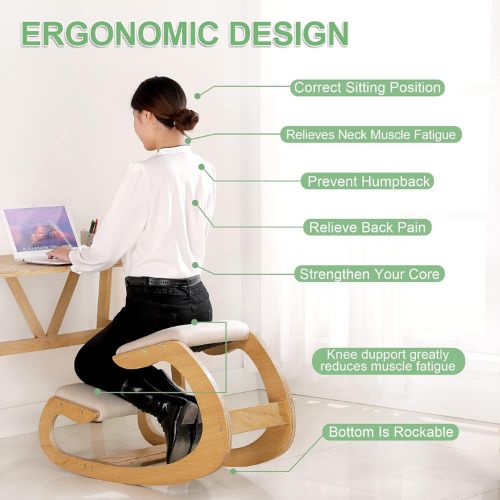
Unlike traditional chairs, which provide back support, kneeling chairs make the user’s muscles work to keep the body upright.
This can lead to stronger core muscles over time, contributing to overall better posture and reduced back pain.
4. Increases circulation
Kneeling chairs can also improve circulation. The open-angle position between the thighs and the torso promotes better blood flow compared to the typical 90-degree angle of traditional chairs.
Improved circulation can reduce the risk of developing circulatory issues such as varicose veins and deep vein thrombosis, which are associated with prolonged sitting.
5. Enhances focus and productivity
The discomfort associated with poor posture and back pain can be distracting, affecting concentration and productivity. By promoting better posture and reducing pain, kneeling chairs can help users stay focused on their tasks.
Additionally, the need to maintain balance and engage core muscles can keep the mind alert, further enhancing productivity.
How Long Should You Sit in a Kneeling Chair?
Experts recommend starting with short periods of use, gradually increasing the duration as your body adapts. Initially, you might want to sit in a kneeling chair for 20 to 30 minutes at a time. Over a few weeks, you can extend this duration to several hours.
It’s crucial to listen to your body and take breaks as needed. Switching between a kneeling chair and a traditional chair can provide a balance, allowing different muscle groups to rest.
Additionally, standing and stretching periodically can help prevent stiffness and promote overall well-being.
Do Chiropractors Recommend Kneeling Chairs?
Many chiropractors acknowledge the benefits of kneeling chairs in promoting better posture and reducing back pain.
However, they also emphasise the importance of using these chairs correctly.
Chiropractors recommend starting with short periods of use and gradually increasing the duration to allow the body to adjust.

They also advise having regular breaks and stretches to avoid muscle fatigue and ensure overall comfort.
It’s important to note that while many chiropractors support the use of kneeling chairs, they also recognise that these chairs may not be suitable for everyone.
Individuals with certain knee or hip conditions might find kneeling chairs uncomfortable. Therefore, it’s advisable to consult with a healthcare professional or chiropractor before making the switch to a kneeling chair, especially if you have pre-existing conditions.
Disadvantages of using kneeling chairs:
While kneeling chairs offer several benefits, they also come with some notable drawbacks. One major issue is their lack of adjustability, particularly in height.
For taller individuals, like those around 5 feet 10 inches or taller, the chair can be too low. This can cause discomfort as your feet may touch the floor awkwardly, leading to your toes touching the floor or the need to move your feet to the side.
Additionally, the design can cause some people to slip down after sitting for extended periods, making it unsuitable for long-term use.
Make sure you evaluate the pros and cons of using a kneeling chair, before you incorporate it into your workspace.